
How to Set Intentions for the New Year (When Goal-Setting Feels Hard)
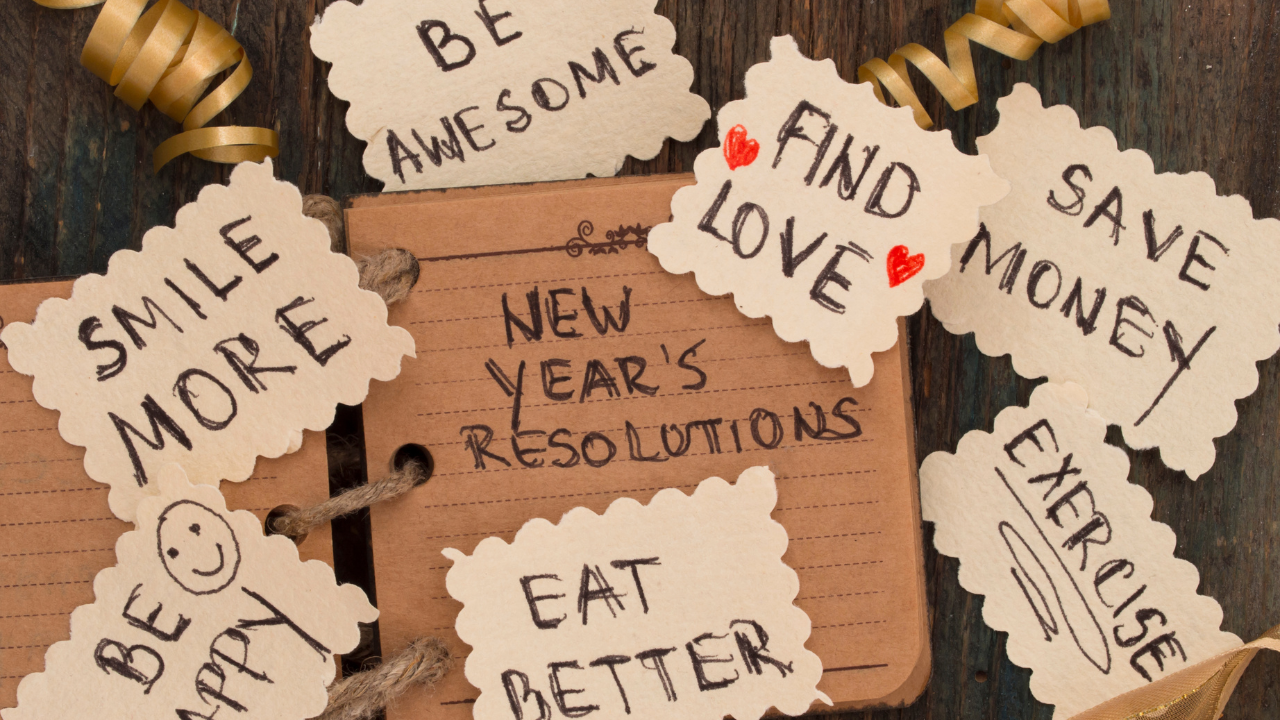
If you’ve ever sat down to set intentions for the new year and felt your mind go completely blank, you’re not alone.
I want to talk about intention setting honestly, because this part has never come naturally to me either.
Looking back on a year feels easier to me. I can usually see the lessons once they’ve already happened. I can trace the themes and make sense of things in hindsight.
Looking forward is different.
When it comes time to name what I want next, my brain tends to get fuzzy. I know I want things. I know I get frustrated when life doesn’t give me what I’m hoping for. But putting clear language around what I want next has always felt harder.
If that sounds familiar, you’re not doing it wrong.
Why intention setting feels so hard
There’s a lot of pressure this time of year to figure everything out at once.
You’re supposed to know what you’re aiming for, feel confident about it, and be able to explain it clearly to yourself. And if you didn’t do that before December 31st, it can start to feel like you missed your chance.
I don’t buy that.
You can reflect on your life and make changes any day you’re alive. There isn’t one moment where clarity suddenly drops in and everything clicks. Most of the time, it shows up slowly, in pieces, once you’ve given yourself some quiet space to listen.
That’s the frame I want to offer here.
Intention setting doesn’t have to start with clarity
Building off a past-year review is usually helpful. Looking back gives you something solid to stand on.
Looking forward is messier.
There’s more noise mixed in with the signal. And while some people seem naturally good at goal setting, many of us need a process that allows for uncertainty at the beginning.
I’ve learned that I can’t force clarity. When I try, I just end up frustrated. What works better for me is giving myself a way to let clarity show up over time.
So instead of starting with goals, this is how I set intentions for the year ahead.
Step 1: Start with open-ended journaling
Open your journal and set a timer for ten minutes.
At the top of the page, write something simple like:
“Intentions for the year ahead.”
Then start writing about what you want more of and what you want less of.
Whatever comes out is fine. Sometimes the writing feels obvious. Sometimes it turns into complaints. Sometimes it’s a jumble of half-formed thoughts that don’t go anywhere.
That’s all okay.
At this stage, you’re not trying to create goals or land on anything definitive. You’re just getting things out of your head so you can see what you’re actually working with.
Step 2: Look at your life in four areas
As you write, it can help to loosely think about your life in four areas: home, mind, body, and soul.
Home includes your literal home, your relationships, and the environments you move through every day.
Mind is your work, career, learning, problem-solving, and how you spend your mental energy.
Body covers your health, movement, rest, and physical care.
Soul is the quieter stuff, like creativity, spirituality, reflection, being of service, and the parts of life that don’t fit neatly into productivity.
You don’t need to divide your writing evenly across these areas. This isn’t a checklist. It’s just a way to notice where your attention naturally goes.
I’ve learned this the hard way. I can make a lot of progress in one area of my life and still feel pretty miserable if I’m neglecting the others. Balance matters more than intensity, even when it comes to intention setting.
Step 3: Use these intention-setting prompts
Once you’ve done some open writing, set a timer for about 30 minutes and work with any of the prompts below that feel useful to you.
You don’t need to answer all of them.
Reflecting forward
When you think about stepping into the year ahead, what still feels unfinished or unresolved from last year?
Direction without pressure
What do you want more of this year?
What do you want less of?
Support and strain
Where do you feel most supported right now?
Where do you feel stretched thin or overlooked?
Grounding it in real life
Describe a regular, good day this year. Not a vacation or a perfect day, just a solid one.
What does it look like? How are you moving through it?
A simple north star
If you had to sum up what you’re moving toward this year in one sentence, what would it be?
You’re not locking anything in here. This is just a snapshot of where you are right now.
If you still have energy, you might also explore what you already know is likely to get in the way this year, and what would help, even a little.
That’s the whole practice.
Let your body be part of the process
One last suggestion before you start writing.
A short, gentle movement practice before you sit down can change the quality of the whole exercise. Nothing intense. Just enough movement to help you get out of your head and back into yourself.
A lot of people notice that their reflections feel softer and more honest when their body has already had a say.
If you want something simple, a short beginner or recovery-style yoga class is a good place to start. I actually created a 22-minute class for this exact situation that you can practice for free on YouTube.
You don’t need to get this perfect
You don’t have to answer every question.
If you get stuck, it’s okay to stare out the window for a bit. If a prompt annoys you, that’s useful information too.
The point isn’t to produce something impressive. It’s to hear yourself more clearly.
Let it be a process. Let it unfold.
Want support as you keep going?
If you found this helpful and want reminders like this in your inbox, you can join my email list for free. I share grounded reflections, simple movement ideas, and practical ways to stay connected to your body without pressure.
If you’re ready for movement support, you can explore the Yoga In Your Living Room Online Studio with a 2-week free trial, or take a look at Re-Wire or Fix Your Posture if you want a more focused place to start.
Meet your guide

